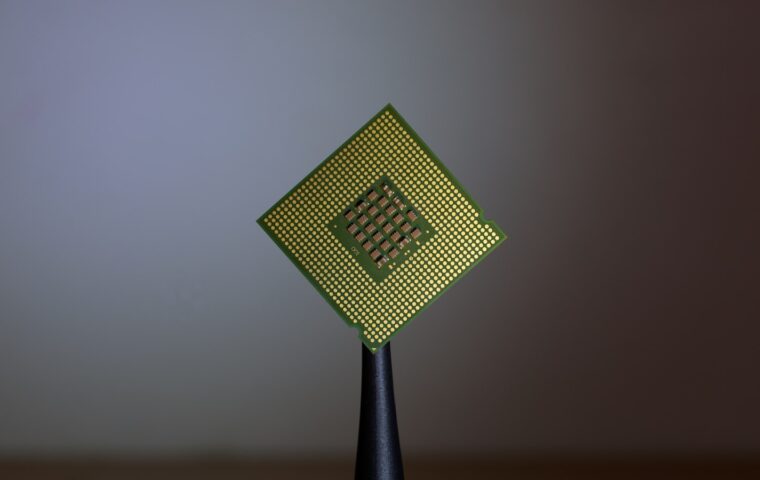

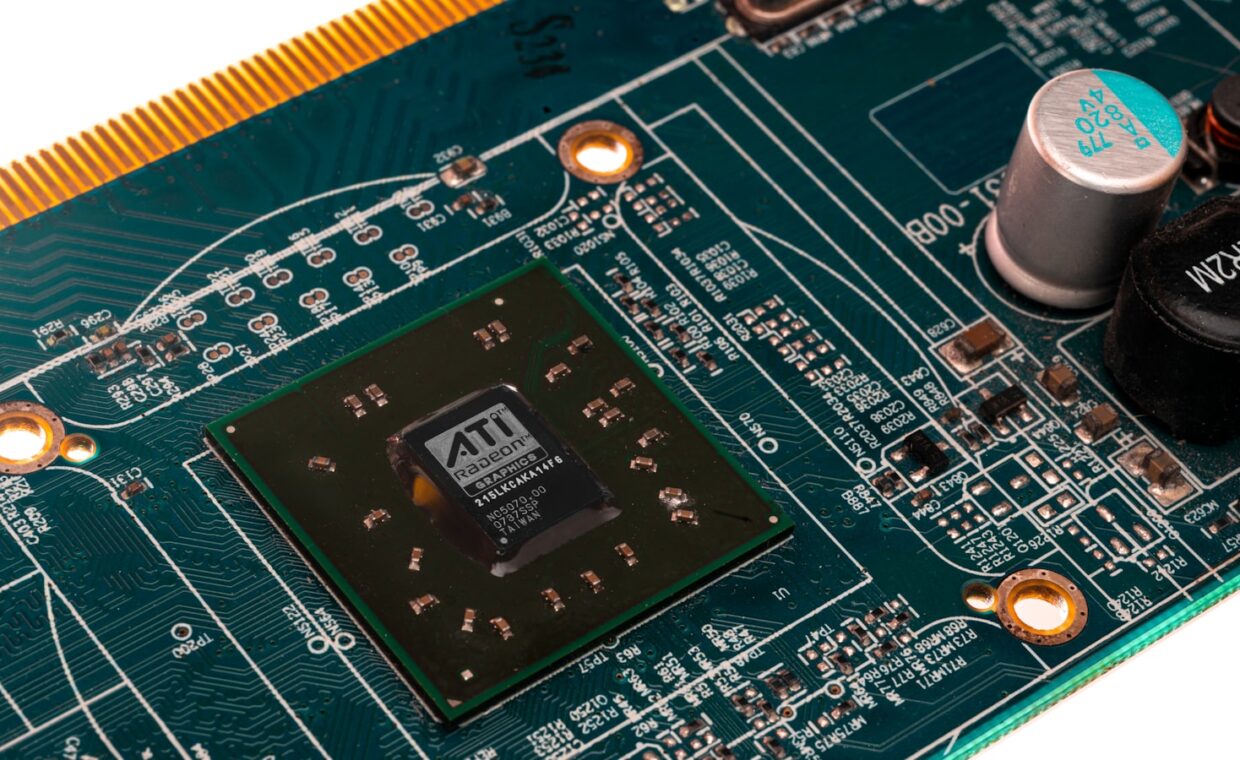
A computer has two kinds of processor that sound similar but work in opposite ways: the CPU, the general-purpose processor, and the GPU, originally built for graphics. They are not simply faster and slower versions of the same thing; they are designed for fundamentally different kinds of work, and understanding the difference explains why GPUs handle graphics and increasingly other tasks, and why a GPU is not just a faster CPU.
Few complex cores versus many simple ones
The fundamental difference is in how they are built. A CPU has a small number of powerful, complex cores, each able to handle complicated, varied tasks quickly, which suits work that is a sequence of different steps. A GPU has an enormous number of simpler cores, each less capable individually but able to work in parallel on many similar calculations at once, which suits work that repeats the same operation across huge amounts of data. This is the crux: the CPU is built for versatility and sequential speed, the GPU for massive parallelism on repetitive work, so each excels at what the other handles poorly.
This is why a GPU is not just a faster CPU. Given a task that is a chain of varied steps, the CPU’s few powerful cores finish it faster than the GPU’s many weak ones, because the work cannot be split. Given a task that repeats the same calculation across millions of data points, the GPU’s parallelism finishes far faster than the CPU could. They are complementary tools for different jobs, the same parallel-versus-sequential distinction the guide on clock speed versus core count explores for CPU cores, taken to an extreme.
Why graphics suits a GPU
Graphics is the original reason GPUs exist, and it is a perfect fit for their design, because rendering an image means performing the same calculations on millions of pixels, exactly the kind of repetitive parallel work a GPU’s many cores handle brilliantly. Calculating the colour of every pixel on a screen, many times a second, is a task that splits naturally across thousands of simple cores, which is why a GPU renders graphics far faster than a CPU could. The GPU was built for this, and its architecture reflects the parallel nature of drawing images, the process the walkthrough on how specialised hardware works touches on.
| CPU | GPU | |
|---|---|---|
| Cores | Few, powerful, complex | Many, simple |
| Best at | Varied sequential tasks | Repetitive parallel tasks |
| Suits | General computing, logic | Graphics, parallel computation |
| Memory need | Moderate | Very high bandwidth |
Why GPUs are used for more than graphics
In recent years GPUs have been put to work far beyond graphics, and the reason follows directly from their design. Many computational tasks, including the mathematics behind modern intelligence and scientific work, involve performing the same calculation across vast amounts of data, exactly the parallel pattern GPUs excel at. So a GPU, built for the parallel work of graphics, turns out to be ideal for these other parallel workloads too, which is why they have become central to fields well beyond gaming. This is not a coincidence but a consequence of their architecture: any work that is massively parallel benefits from the GPU’s many cores, whether it is drawing pixels or crunching data.
Why memory bandwidth matters for GPUs
Because a GPU processes so much data in parallel, it needs to move enormous amounts of data to and from memory quickly, which is why GPUs have very high memory bandwidth, far more than a CPU needs. Feeding thousands of cores working simultaneously requires a wide, fast path to memory, and this is why dedicated graphics cards come with their own fast memory rather than sharing the system’s, the bandwidth constraint the article on how much graphics memory you need examines and our coverage of how devices connect to the system touches on. A GPU starved of memory bandwidth cannot use its parallelism, which is why bandwidth is as central to a GPU as its core count.
Do you need a graphics card for everyday tasks
Understanding the difference clarifies whether you need a dedicated GPU. For everyday computing, browsing, documents, video, light editing, the integrated graphics built into the CPU is ample, and a dedicated GPU brings no benefit, since these tasks do not need massive parallelism. A dedicated GPU matters for demanding games, three-dimensional work, video editing, and the parallel computation of fields like intelligence and science. So the answer depends entirely on your work: most people do not need a dedicated graphics card, while those doing genuinely parallel heavy work do, a decision that rests on matching the hardware to the task rather than on the GPU being generally better, as the breakdown of matching a device to real needs reflects across hardware.
The two working together
In practice the CPU and GPU are not rivals but partners, each handling the part of a task that suits it. In a game, the CPU handles the game logic, the sequence of decisions and calculations that unfold as you play, while the GPU draws the images those decisions produce, the two working in concert. In creative work, the CPU manages the application and the GPU accelerates the heavy parallel processing. This division of labour is why a good computer needs both a capable CPU and, for demanding graphics or parallel work, a capable GPU, since each does what the other cannot.
Understanding this partnership clarifies where to spend when building or buying a computer. For general use, a good CPU with integrated graphics covers everything, since the GPU work is light. For gaming and creative work, a dedicated GPU becomes as important as the CPU, and a balance between the two matters, because a powerful GPU held back by a weak CPU, or the reverse, wastes the stronger part. Matching the CPU and GPU to each other and to your work, rather than maximising one alone, is how you build a machine that performs well at what you actually do, which is the sensible conclusion of understanding how the two differ and how they cooperate.
Common questions
What is the difference between a CPU and GPU?
A CPU has a few powerful, complex cores built for varied sequential tasks, while a GPU has many simple cores built for repetitive parallel work. The CPU excels at general computing and chains of different steps; the GPU excels at performing the same calculation across huge amounts of data, like drawing millions of pixels. They are complementary tools for different kinds of work, not faster and slower versions of the same thing.
Do I need a graphics card for everyday tasks?
No. For browsing, documents, video, and light editing, the integrated graphics built into the CPU is more than enough, and a dedicated graphics card brings no benefit because these tasks do not need massive parallelism. A dedicated GPU matters for demanding games, three-dimensional work, video editing, and heavy parallel computation. Most people are well served by integrated graphics and do not need a separate card.
Why are GPUs used for AI?
Because the mathematics behind modern intelligence involves performing the same calculation across vast amounts of data, exactly the massively parallel pattern GPUs are built for. A GPU’s thousands of simple cores can work on these calculations simultaneously, finishing far faster than a CPU’s few cores could. The GPU, designed for the parallel work of graphics, turns out to be ideal for the parallel work of intelligence, which is why it has become central to the field.