

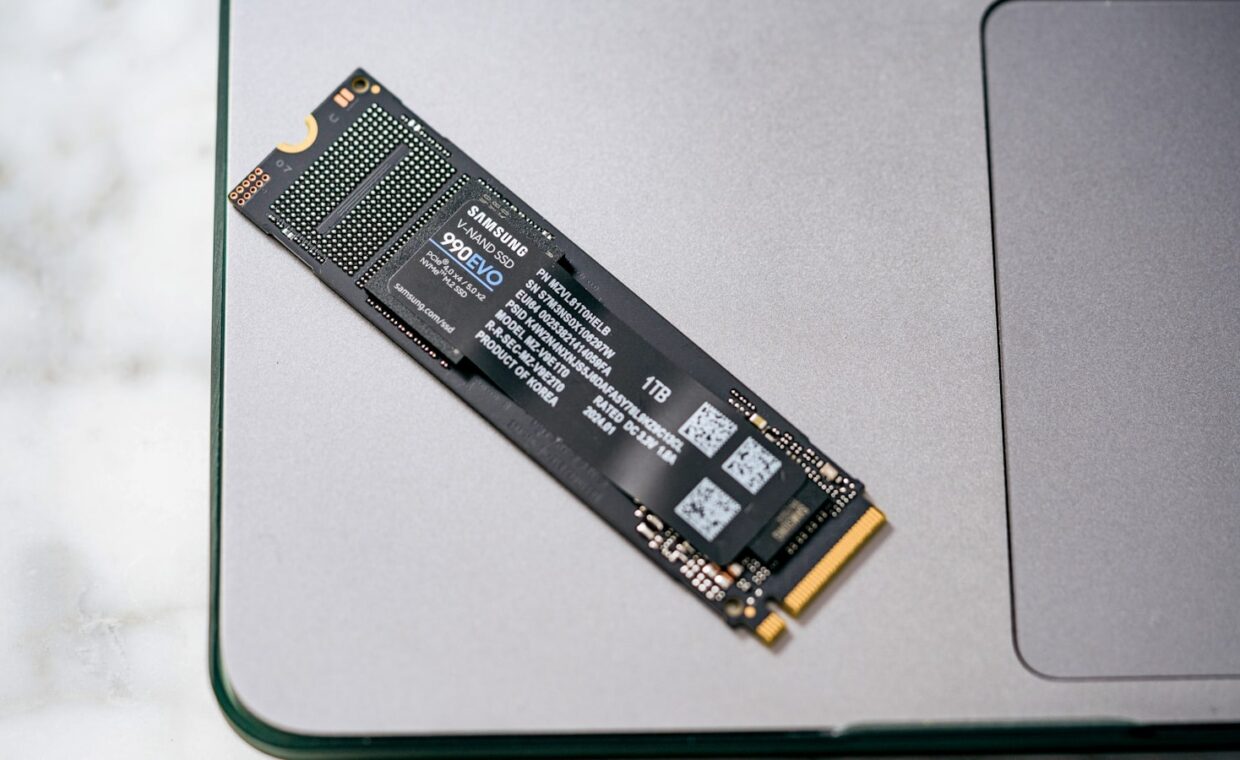
Buried in an SSD‘s specifications is a figure called TBW, standing for terabytes written, which is the manufacturer’s rating of how much data can be written to the drive over its life. It sounds alarming, a limit on writing, but understanding what TBW really means, and how it compares with how much you actually write, turns it from a worry into a reassurance about how long a drive will last.
What TBW is
TBW is the total amount of data a manufacturer guarantees can be written to the drive before its endurance is used up, expressed in terabytes written. It is essentially the drive’s write endurance budget: you can write up to that much data over the drive’s life within the warranty. A higher TBW means the drive can endure more writing, and TBW scales with capacity and quality, so larger and premium drives have higher TBW ratings. It is a real measure of endurance, but its significance depends entirely on comparing it with how much you actually write, since a limit only matters relative to how fast you approach it, the comparison our guide to how SSDs wear sets up.
Typical TBW and what it means
TBW figures for consumer drives are typically in the hundreds of terabytes, rising with capacity, so a larger drive can endure more total writing than a smaller one of the same type. To make sense of such a figure, it has to be set against real write volumes, which is where it becomes reassuring rather than worrying. A rating of hundreds of terabytes sounds like a lot because it is: it represents far more writing than ordinary use produces over many years, which is why for most people the TBW is a number they will never approach. The figure matters mainly for unusually write-heavy uses, while for everyday computing it is a comfortable margin the drive will never exhaust, the margin the primer on how drives behave under real writing reflects.
Measuring your own write volume
To know whether TBW matters for you, measure how much you actually write, which drive monitoring tools report as total data written over the drive’s life. Dividing that by how long you have had the drive gives your daily write volume, which for most people is surprisingly small, often tens of gigabytes a day or less. Comparing your daily writes with the drive’s TBW reveals how long the drive will last at your rate, and for typical users this works out to decades, far beyond the drive’s service life. This simple check, your write rate against the TBW, is the way to turn an abstract rating into a concrete lifespan for your actual use, the personal-measurement approach the explainer on matching a drive to your needs reflects.
| Input | Typical value |
|---|---|
| Drive TBW rating | Hundreds of terabytes |
| Ordinary daily writes | Tens of gigabytes or less |
| Resulting lifespan | Decades, beyond service life |
| Write-heavy workload | Can approach the limit sooner |
What happens when TBW is exceeded
Exceeding the TBW does not mean the drive instantly dies, which is a common misunderstanding. TBW is a warranty and endurance guarantee, and a drive that passes its TBW is beyond its guaranteed endurance but usually keeps working, often for a good while, since the rating is conservative. As a drive genuinely nears the end of its write endurance, it typically shifts to read-only, preserving your data while refusing new writes, a graceful end rather than sudden death. So exceeding TBW is a sign the drive is past its rated life and worth planning to replace, not a moment of failure, and it is a situation almost no ordinary user reaches, the graceful-wear behaviour our look at how drives reach the end of their lives contrasts with mechanical failure.
Warranty and the real takeaway
TBW is tied to the warranty, which usually covers the drive for a period or until the TBW is reached, whichever comes first, so it defines the endurance side of the guarantee. This is useful to know for warranty purposes, but the real takeaway is reassurance: for ordinary use, the TBW is so far beyond what you will write that it is not a practical concern, and the drive will be replaced for capacity or speed long before endurance matters. Only genuinely write-heavy workloads need to weigh TBW seriously and consider higher-endurance drives. For everyone else, TBW is a number worth understanding precisely so that it can be set aside, since it confirms that SSD endurance is not the fragile limit it might first appear, but a generous margin that comfortably outlasts normal use, the reassurance our rundown on understanding hardware limits sensibly reflects.
Putting TBW in perspective
The most useful thing about understanding TBW is that it lets you stop worrying about it. Once you have measured your own write rate and seen that it would take decades to reach the rating, the number transforms from a vague source of anxiety into concrete reassurance that endurance is not your concern. This is worth doing precisely because SSD endurance is so often misunderstood as a fragile limit, when for ordinary use it is a generous margin that comfortably outlasts the drive service life, and seeing that for yourself in your own numbers is more convincing than being told.
Where TBW genuinely matters is at the extremes, for workloads that write enormous amounts of data continuously, such as certain database, logging, or video-capture uses, where the daily writes are large enough that the TBW could be approached within the drive life. For those, choosing a higher-endurance drive and monitoring the write volume is sensible, and the TBW becomes a real specification to weigh. But identifying whether you are in that category is easy, by measuring your writes, and almost everyone discovers they are not, leaving TBW as a number to note and then set aside, confident that the drive will serve for years without its endurance ever becoming the reason it is replaced.
Quick answers
What does TBW mean on an SSD?
TBW means terabytes written, the total amount of data the manufacturer guarantees can be written to the drive before its endurance is used up. It is the drive’s write endurance budget within the warranty. A higher TBW means more writing endurance, and it scales with capacity and quality. Its significance depends on comparing it with how much you actually write, which for most people is far below the rating.
How many years will my SSD last?
Measure how much you write daily, which drive monitoring tools report, and divide the TBW by that rate. For most people, writing tens of gigabytes a day against a rating of hundreds of terabytes, this works out to decades, far beyond the drive’s service life. Only unusually write-heavy workloads approach the limit sooner. For ordinary use, the drive will be replaced for capacity or speed long before endurance runs out.
Does exceeding TBW mean the drive dies?
No. TBW is a warranty and endurance guarantee, and a drive past its TBW is beyond its guaranteed endurance but usually keeps working, often for a good while, since the rating is conservative. As a drive genuinely nears the end of its endurance, it typically becomes read-only, preserving your data rather than failing suddenly. Exceeding TBW is a sign to plan a replacement, not a moment of failure.